
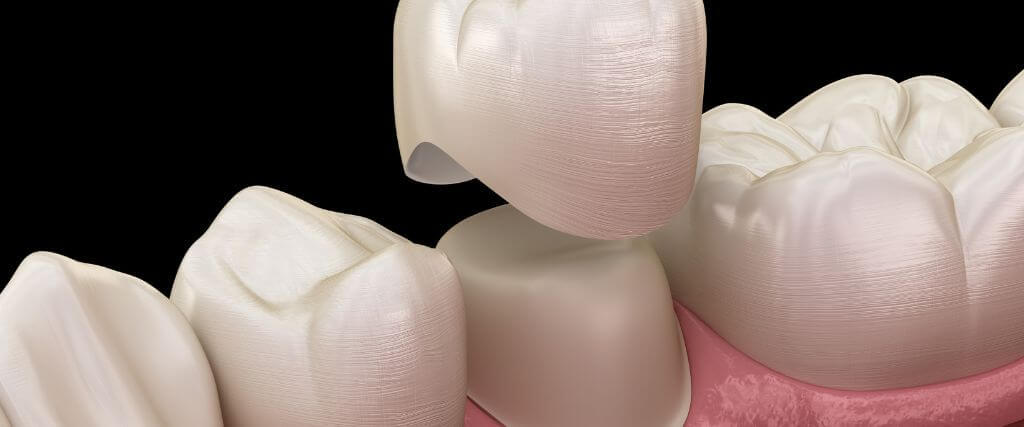
A dental crown is a cap that covers and protects a damaged tooth. The best material depends on where the tooth is and what it needs to do: tooth-colored ceramics such as zirconia and lithium disilicate look natural and suit most teeth, while metal and gold crowns are very strong for back teeth. At Comfy Dental Studios in Beverly Hills, we choose the most conservative option that will last, and sometimes that is not a full crown at all.
When do you need a crown?
- a large cavity or old filling that leaves the tooth weak,
- a cracked or broken tooth,
- a tooth after a root canal,
- a badly worn tooth, often from grinding, or
- on top of a dental implant or as part of a bridge.
If enough healthy tooth remains, a smaller inlay or onlay can often save more of your natural tooth than a full crown.
Crown materials compared
| Material | Looks | Strength | Best for |
|---|---|---|---|
| Zirconia | Natural, tooth-colored | Very high | Back teeth, people who grind |
| Lithium disilicate (e.max) | Very natural, lifelike | High | Front teeth and premolars |
| Porcelain fused to metal | Good, may show a dark line over time | High | Older standard, used less today |
| Gold or metal alloy | Metal colored | Highest, gentle on opposite teeth | Back molars out of view |
| Composite resin | Tooth-colored | Lower, wears faster | Temporary or short term crowns |
Common crown myths
Myth: crowns look fake. Modern ceramic crowns are shaded and shaped to match your other teeth. Most people cannot tell which tooth has a crown.
Myth: getting a crown hurts. The tooth is numbed, and most patients feel pressure, not pain. Mild sensitivity for a few days is normal.
Myth: crowned teeth cannot get cavities. The edge where the crown meets the tooth can still decay. Brushing, flossing and regular cleanings are still needed.
Myth: crowns last forever. Most crowns last 10 to 15 years or longer with good care, but grinding, decay at the edges or hard biting can shorten that.
Myth: a crown means the tooth is lost. A crown saves a tooth that might otherwise need to be removed.
Crowns vs. veneers
Both are custom caps or shells, but they do different jobs.
- A crown covers the whole tooth. It restores strength to a damaged, cracked or root canal treated tooth.
- A veneer covers only the front surface. It changes color and shape on teeth that are otherwise healthy.
If your goal is mainly cosmetic, veneers usually keep more of your natural tooth. If the tooth is weak, a crown is the safer choice. Many smile makeovers use both. See our guide to veneers vs. teeth whitening for cosmetic options.
What to expect
- Exam and X-rays to check the tooth and root.
- Preparation: the tooth is numbed and shaped, and a digital scan or impression is taken.
- Temporary crown while your custom crown is made.
- Placement: the final crown is checked for fit, color and bite, then bonded in place.
Learn more on our dental crowns page. We offer financing to spread the cost.
Questions we hear
How long do dental crowns last?
Most crowns last 10 to 15 years or longer. Good home care, regular cleanings and a night guard if you grind help them last.
Which crown material is best?
It depends on the tooth. Zirconia is very strong for back teeth, lithium disilicate looks the most natural for front teeth, and gold is very durable for molars out of view.
Does getting a crown hurt?
The tooth is numbed first, so most patients feel only pressure. Some sensitivity for a few days afterward is normal.
Can a crowned tooth still get a cavity?
Yes. Decay can form where the crown meets the natural tooth, so brushing, flossing and regular cleanings still matter.
Should I get a crown or a veneer?
A crown restores a weak or damaged tooth. A veneer improves the look of a healthy tooth. Your dentist will recommend the most conservative option that will last.
Book a crown consultation: book online or call us at (310) 499-2048.